
VIP member
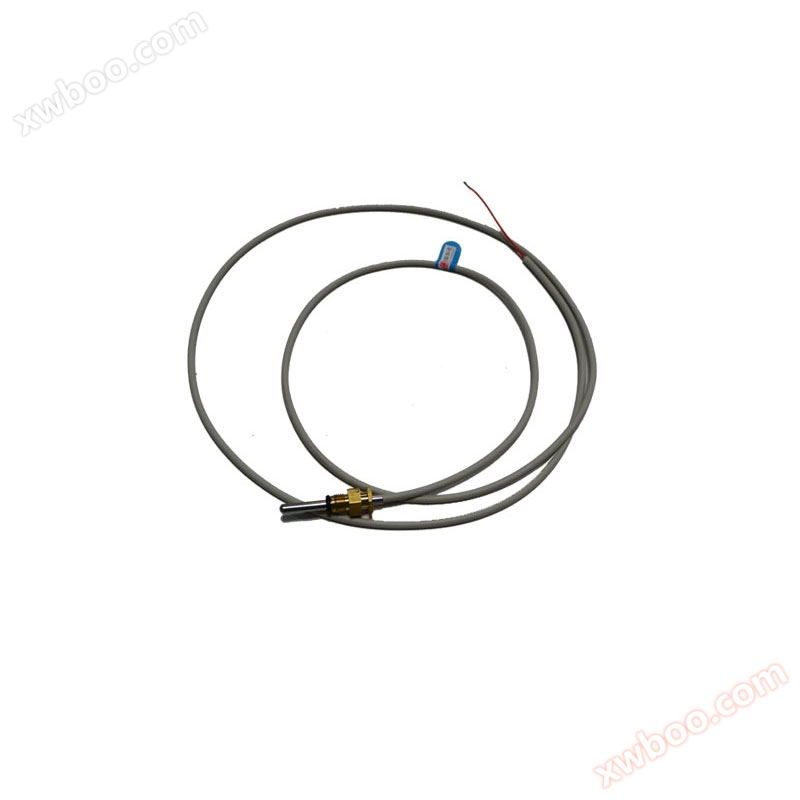
NTC thermistor
Hangzhou Yafei Automation Equipment Co., Ltd. is located by the beautiful West Lake and was founded in 1993. It is a professional manufacturer of ther
Product details
 working principle
Working principle of NTC negative temperature coefficient thermistor
NTC stands for Negative Temperature Coefficient, which refers to semiconductor materials or components with a high negative temperature coefficient. The so-called NTC thermistor is a negative temperature coefficient thermistor. It is mainly made of metal oxides such as manganese, cobalt, nickel, and copper, and is manufactured using ceramic technology. These metal oxide materials all have semiconductor properties because their conductivity is completely similar to semiconductor materials such as germanium and silicon. When the temperature is low, the number of charge carriers (electrons and holes) in these oxide materials is small, so their resistance values are high; As the temperature increases, the number of charge carriers increases, so the resistance value decreases. The variation range of NTC thermistor at room temperature is 100~1000000 ohms, with a temperature coefficient of -2%~-6.5%. NTC thermistors are widely used in temperature measurement, temperature control, temperature compensation, and other fields.
NTC Negative Temperature Coefficient Thermistor Composition
NTC (Negative Temperature Coefficient) refers to the phenomenon and material of a thermistor with a negative temperature coefficient, where the resistance decreases exponentially with increasing temperature. This material is a semiconductor ceramic made by fully mixing, forming, and sintering two or more metal oxides such as manganese, copper, silicon, cobalt, iron, nickel, and zinc. It can be used to make a thermistor with a negative temperature coefficient (NTC). Its resistivity and material constant vary with the composition ratio, sintering atmosphere, sintering temperature, and structural state of the material. Non oxide NTC thermistor materials represented by silicon carbide, tin selenide, tantalum nitride, etc. have also emerged.
NTC thermosensitive semiconductor ceramics are mostly oxide ceramics with spinel structure or other structures, which have a negative temperature coefficient. The resistance value can be approximately expressed as:
In the formula, RT and RT0 are the resistance values at temperatures T and T0, respectively, and Bn is the material constant. The ceramic grains themselves change their resistivity due to temperature changes, which are determined by the semiconductor properties.
The most important performance of NTC negative temperature coefficient thermal sensitivity is its lifespan
Long life NTC thermistor is an improvement in the understanding of NTC thermistor, emphasizing the importance of resistor life. The most important thing about NTC thermistors is their lifespan. After withstanding various high-precision, high sensitivity, high reliability, ultra-high temperature, and high pressure tests, they still work stably for a long time.
Lifespan is an important performance of NTC thermistors, which is dialectically related to other parameters such as accuracy and sensitivity. A NTC resistor product must first have a long lifespan in order to ensure the performance of other aspects; And the excellence of other performance depends on the production process reaching a certain level of technology, which makes the long life of NTC possible.
Many high-tech electronic products require thermistors to perform stable temperature control and measurement functions under extreme high temperature, high pressure, and other harsh conditions. Most manufacturers blindly pursue the stable performance of NTC thermistors in terms of accuracy, sensitivity, drift value, and other conventional properties, ignoring the lifespan of the resistors, resulting in the inability of NTC to work for a long time and affecting the use of electronic products. In this way, all precision, sensitivity, high temperature resistance, and so on, become meaningless.
Lifespan is an important performance of NTC thermistors, which is dialectically related to other parameters such as accuracy and sensitivity. A NTC resistor product must first have a long lifespan in order to ensure the performance of other aspects; And the excellence of other performance depends on the production process reaching a certain level of technology, which makes the long life of NTC possible.
Many high-tech electronic products require thermistors to perform stable temperature control and measurement functions under extreme high temperature, high pressure, and other harsh conditions. Most manufacturers blindly pursue the stable performance of NTC thermistors in terms of accuracy, sensitivity, drift value, and other conventional properties, ignoring the lifespan of the resistors, resulting in the inability of NTC to work for a long time and affecting the use of electronic products. In this way, all precision, sensitivity, high temperature resistance, and so on, become meaningless.
NTC Negative Temperature Coefficient Thermistor History
The development of NTC thermistors has gone through a long stage. In 1834, scientists first discovered the negative temperature coefficient property of silver sulfide. In 1930, scientists discovered that cuprous oxide copper oxide also had negative temperature coefficient performance and successfully applied it in temperature compensation circuits for aviation instruments. Subsequently, due to the continuous development of transistor technology, significant progress was made in the research of thermistors. In 1960, NTC thermistors were developed.
NTC Negative Temperature Coefficient Thermistor Temperature Range
Its measurement range is generally -10 to+300 ℃, but it can also reach -200 to+10 ℃, and can even be used for temperature measurement in an environment of+300 to+1200 ℃
The accuracy of the negative temperature coefficient thermistor thermometer can reach 0.1 ℃, and the temperature sensing time can be as short as 10 seconds or less. It is not only suitable for grain storage thermometers, but also for temperature measurement in food storage, medicine and health, scientific farming, ocean, deep wells, high altitude, glaciers and other fields.
Instructions
The NTC Thermistor Handbook "is the first professional electronic book in the industry, which contains various knowledge related to NTC thermistors and is an essential reference book for practitioners. The specific content is as follows:
Introduction
The working principle, types, symbol representation, model representation, lead introduction, and detailed explanation of professional terminology of NTC thermistor.
Selection requirements
How to determine the required NTC thermistor type, application environment, accuracy, sensitivity, stability, and linear range in practical applications.
practical application
The application of NTC thermistor in temperature reading of red wine bottle stoppers, smart toilets, and coolant temperature sensors.
technical operation
How to conduct simple NTC thermistor resistance and reliability testing[2]
NTC Negative Temperature Coefficient Thermistor Technical Terminology
Zero power resistance value RT (Ω)
RT refers to the resistance value measured using a measurement power that causes negligible changes in resistance relative to the total measurement error at a specified temperature T.
The relationship between resistance value and temperature change is:
RT = RN expB(1/T – 1/TN)
RT: NTC thermistor resistance at temperature T (K).
RN: NTC thermistor resistance at rated temperature TN (K).
T: Specify temperature (K).
B: The material constant of NTC thermistor, also known as thermal index.
Exp: an exponent based on the natural number e (e=2.71828...).
This relationship is an empirical formula that only has a certain degree of accuracy within a limited range of rated temperature TN or rated resistance RN, because the material constant B itself is also a function of temperature T.
Rated zero power resistance value R25 (Ω)
According to the national standard, the rated zero power resistance value is the resistance value R25 measured by the NTC thermistor at a reference temperature of 25 ℃. This resistance value is the nominal resistance value of the NTC thermistor. What is the resistance value of NTC thermistor commonly referred to.
Material constant (thermal sensitivity index) B value (K)
B value is defined as:
B=T1*T2/(T2-T1)ln(RT1/RT2)
RT1: Zero power resistance value at temperature T1 (K).
RT2: Zero power resistance value at temperature T2 (K).
T1, T2: Two designated temperatures (K).
For commonly used NTC thermistors, the B value range is generally between 2000K and 6000K.
Zero power resistance temperature coefficient (α T)
The ratio of the relative change in the zero dynamic power resistance value of an NTC thermistor at a specified temperature to the temperature change value that causes the change.
α T: Temperature coefficient of zero power resistance at temperature T (K).
RT: Zero power resistance value at temperature T (K).
T: Temperature (T).
B: Material constant.
Dissipation coefficient (δ)
At the specified ambient temperature, the dissipation coefficient of NTC thermistor is the ratio of the power dissipated in the resistor to the corresponding temperature change of the resistor body.
δ: NTC thermistor dissipation coefficient, ( mW/ K )。
△ P: The power consumption of NTC thermistor (mW).
△ T: When the NTC thermistor consumes power △ P, the corresponding temperature change of the resistor body (K).
Thermal time constant (τ)
Under zero power conditions, when the temperature suddenly changes, the time required for the temperature of the thermistor to change by 63.2% of the initial temperature difference is proportional to the thermal capacity of the NTC thermistor and inversely proportional to its dissipation coefficient.
τ: Thermal time constant (S).
C: The thermal capacity of NTC thermistor.
δ: The dissipation coefficient of NTC thermistor.
Rated power Pn
The power consumption allowed for long-term continuous operation of a thermistor under specified technical conditions. At this power, the temperature of the resistor itself does not exceed its maximum operating temperature.
Maximum operating temperature Tmax
The maximum temperature allowed for a thermistor to operate continuously for a long time under specified technical conditions. Namely:
T0- Environmental temperature.
Measure power Pm
The resistance change of a thermistor caused by the heating of the resistor body by the measured current at a specified ambient temperature can be ignored relative to the total measurement error, and the power consumed without timing can be ignored.
If the resistance change is generally required to be greater than 0.1%, the measured power Pm at this time is:
Resistance temperature characteristics
The temperature characteristics of NTC thermistor can be approximated by the following equation:
Where:
RT: Zero power resistance value at temperature T.
A: The coefficient related to the physical properties and geometric dimensions of thermistor materials.
B: B value.
T: Temperature (k).
A more precise expression is:
Where:
RT: The zero power resistance value of a thermistor at temperature T.
T: For absolute temperature values, K;
A. B, C, D: are specific constants.
NTC Negative Temperature Coefficient Thermistor R-T Characteristics
Schematic diagram of R-T characteristic curves with the same B value but different resistance values
Schematic diagram of R-T characteristic curve of NTC thermistor with the same resistance but different B values
NTC thermistor for temperature measurement and control
external structure
Epoxy encapsulation series NTC thermistor
Glass encapsulated NTC thermistor series
Application Circuit Schematic Diagram
Temperature measurement (Wheatstone bridge circuit)
temperature control
Application Design
Electronic thermometer, electronic perpetual calendar, electronic clock temperature display, electronic gifts;
Heating and cooling equipment, heating and constant temperature electrical appliances;
Automotive electronic temperature measurement and control circuit;
Temperature sensors and temperature instruments;
Medical electronic devices, electronic washing equipment;
Mobile phone batteries and charging appliances.
Online inquiry
-
Contacts
-
Company
-
Telephone
-
Email
-
WeChat
-
Verification Code
-
Message Content
-