
VIP member
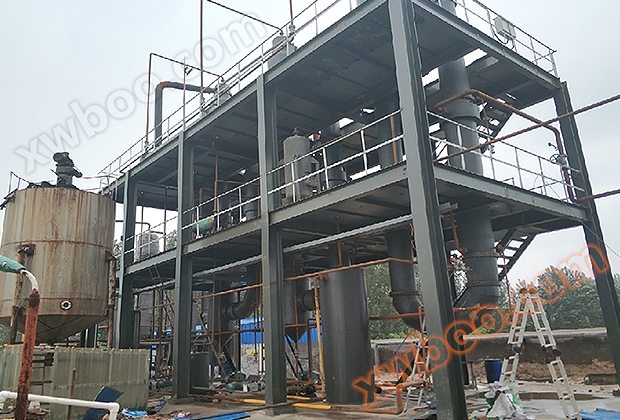
evaporative crystallization
Evaporative crystallization is suitable for substances whose solubility does not change significantly with temperature. It is the process of heating a
Product details
Evaporative crystallization is suitable for substances whose solubility does not change significantly with temperature. It is the process of heating and evaporating a solution to change from unsaturated to supersaturated, resulting in the precipitation of solutes in crystalline form. According to the different forms of input energy, evaporation systems can be divided into MVR, multi effect TVR、 Waste heat evaporation. The evaporator is mainly a forced circulation evaporator, and the crystallizers mainly include FC, OSLO, and DTB. In specific engineering, the key to designing an evaporative crystallization system lies in the temperature characteristics of the processed materials, scaling tendency, crystallization requirements, and selection of heat transfer temperature differences.
Online inquiry
-
Contacts
-
Company
-
Telephone
-
Email
-
WeChat
-
Verification Code
-
Message Content
-