
VIP member
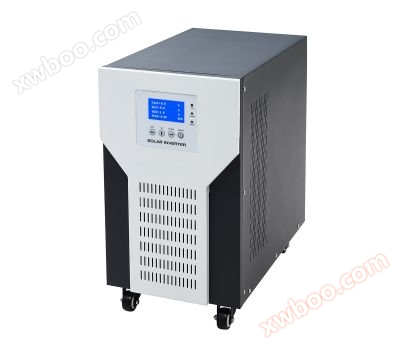
ZRS Photovoltaic Direct In Energy Storage Inverter
Two recommended working modes for inverters: mains power priority 1. When the photovoltaic energy is sufficient, the photovoltaic system provides powe
Product details
|
Priority given to mains electricity 1. When the photovoltaic energy is sufficient, it not only supplies power to the load but also charges the battery; 2. When the photovoltaic energy is insufficient, the photovoltaic and mains power provide energy to the load together, while the battery does not provide energy to the load; 3. When the photovoltaic energy is insufficient and the mains power is cut off, the photovoltaic and battery together provide energy to the load; 4. When the photovoltaic system has no energy at all and the battery discharges to the low voltage protection point, the load is completely powered by the mains electricity. significant advantage 1. The system prioritizes the use of photovoltaic energy, and when the photovoltaic energy is insufficient for local loads, it is supplemented by the mains power to fully utilize the photovoltaic energy; 2. In this working mode, the battery is only discharged and replenished when there is insufficient photovoltaic energy and a power grid failure. In general, batteries are in a fully charged state, greatly extending their service life. |
|
| Working mode of photovoltaic direct in energy storage inverter | ||
|
Battery priority 1When the photovoltaic energy is sufficient, it not only supplies power to the load but also charges the battery; 2. When the photovoltaic energy is insufficient and the battery voltage is greater than 48V or 96V, the photovoltaic and battery together provide energy to the load, and the mains power does not provide energy to the load; 3Insufficient photovoltaic energy and battery voltage less than 48VOr 96VAt this time, the battery will be controlled to linearly reduce the output energy, providing only a portion of the energy to the load, and the remaining portion will be supplied by the mains power. significant advantage 1. The system prioritizes the use of photovoltaic energy, and the mains power only serves as the final supplementary power supply when both photovoltaic energy and batteries are insufficient, greatly reducing electricity costs; 2. This working mode does not involve frequent switching between the battery and the mains power, and the battery has fewer charging and discharging cycles, resulting in a relatively longer service life; 3. The seamless integration of photovoltaic/battery and mains power ensures stable and reliable load power supply. |


|
Compared to traditional off grid inverters that require a battery to be used, ZRS direct in inverters can function normally without a battery. The direct inverter automatically starts up and supplies power to the load in both photovoltaic and mains power states. Without the constraints of batteries, system installation and maintenance are simpler, which is beneficial for reducing operating costs and minimizing environmental pollution caused by discarded batteries. |
Compared to traditional grid connected inverters that cannot be used in the event of a power grid failure, ZRS photovoltaic direct in energy storage inverters will switch to off grid mode in the event of a power grid failure, with the photovoltaic or battery continuing to provide energy to the load. |
Compared to traditional off grid inverters that require large capacity batteries, ZRS direct in energy storage inverters can flexibly adapt to batteries of various sizes and capacities. The direct input energy storage inverter is compatible with various battery types such as lead-acid batteries and lithium-ion batteries (lead-acid batteries are default at the factory, please note if lithium batteries are required). Both photovoltaic and mains power can charge the battery, and the charging current can be customized. |
|
The direct in energy storage inverter automatically starts up in both mains and photovoltaic power supply states, facilitating power management in unmanned situations. |
Large size LCD display screen and LED indicator light, real-time display of various operating parameters of the inverter: dual PV information, battery and power generation, temperature and total photovoltaic power, inverter output, load and working status, power grid, alarm and fault information. Support multiple communication software for remote monitoring of RS232/RS485/mobile app/SNMP/GSM (optional function) |
Output short circuit protection, overload protection, over-voltage protection, over-frequency protection, over temperature protection, islanding protection |


| Basic Parameters | |||||
| Model ZRS | 3KW | 5KW | 8KW | 10KW | |
| Photovoltaic input | Maximum input voltage (at 25 ° C) | 150V | 350V | ||
| MPPT tracking range | 60V-120V (recommended open circuit voltage within 120V) | 120V-240V (recommended open circuit voltage within 240V) | |||
| MPPT channels | 2 routes | ||||
| Maximum Input Power | 1960W/1960W | 3360W/3360W | 5600W/5600W | 6700W/6700W | |
| storage battery (Flexible configuration) Not accepted) |
Battery Type | Lead acid battery/lithium-ion battery | |||
| rated voltage | 48V | 96V | |||
| Maximum charging current (adjustable, recommended 0.1C) | 70A (photovoltaic)/35A (mains) | 120A (photovoltaic)/60A (mains power) | 100A (photovoltaic)/10A (mains) | 120A (photovoltaic)/20A (mains) | |
| Floating voltage (adjustable) | 55.2V | 110.4V | |||
| Equal charging voltage (adjustable) | 56.8V | 113.6V | |||
| communication input | Rated input voltage | 220V/230V | |||
| Grid connected voltage range | 187V~264V | ||||
| Grid connected input frequency | 50Hz/60Hz±5Hz | ||||
| Power outage protection time | ≤2S | ||||
| Reconnect time | 30S | ||||
| communication output (Independent inverter) |
Rated output power | 3KW | 5KW | 8KW | 10KW |
| rated output voltage | 220V/230V | ||||
| voltage accuracy | ±2% | ||||
| Rated output frequency | 50Hz/60Hz | ||||
| Output frequency accuracy | ±1% | ||||
| communication output (Grid mode) |
Rated output power | 3KW | 5KW | 8KW | 10KW |
| output voltage | 187V~264V | ||||
| output frequency | 47~52Hz/57~62Hz | ||||
| Conventional Parameters | topological structure | Isolation of power frequency transformer | |||
| display | LCD+LED | ||||
| communication | RS485 (optional) | ||||
| Operating Temperature | -10 ℃~60 ℃ (used for derating above 45 ℃) | ||||
| Storage temperature | -20℃~60℃ | ||||
| noise | ≤60dB | ||||
| relative humidity | 20%~95% (no condensation) | ||||
| altitude | 2000m (>2000m needs to be downgraded for use) | ||||
| Machine size (L * W * Hmm) | 467*280*508 | 548*300*675 | |||
| Packaging size (L * W * Hmm) | 530*340*635 | 610*440*800 | |||
| Net weight (kg) | 40 | 49 | 70 | 75 | |
| Gross weight (kg) | 47 | 56 | 80 | 85 | |
| Note: Please contact the sales consultant to obtain the latest product specifications | |||||

Application field
1. Not equipped with batteries, suitable for areas with developed power grids but expensive electricity bills, or areas that only require daytime electricity, or areas without electricity. The system prioritizes the use of photovoltaic energy to alleviate the pressure on the power grid and reduce electricity costs;
2. Configure small capacity batteries, suitable for areas with average grid stability or areas without electricity, and provide stable and high-quality AC power for loads in conjunction with photovoltaic energy;
3. Equipped with standard capacity batteries, suitable for areas that require energy storage and electricity consumption, or areas with unstable or no power grid. The system provides a stable, pure, and high-quality AC power supply for the load, which is often used to solve power supply problems in islands and remote areas.Application of Transformers in Photovoltaic Power Generation Systems

Wiring diagram of photovoltaic direct in energy storage inverter

Online inquiry
-
Contacts
-
Company
-
Telephone
-
Email
-
WeChat
-
Verification Code
-
Message Content
-