
VIP member
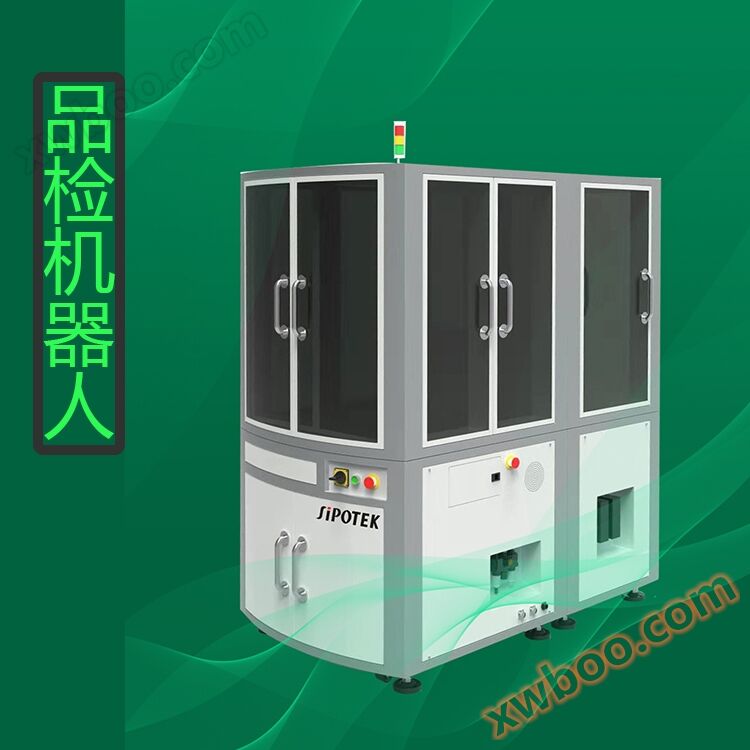
Visual inspection of hardware, plastic connectors, injection molded inserts, appearance inspection of defective products, screening and elimination equipment
Machine vision can be said to be the soul window of industrial automation systems, from object/barcode recognition, product inspection, appearance siz
Product details
Machine vision can be said to be the soul window of industrial automation systems, from object/barcode recognition, product inspection, appearance size measurement to mechanical arm/transmission equipment positioning, all of which are stages where machine vision technology can play a role. In order to meet the constantly emerging demands of new applications, new development directions have emerged in the design of industrial cameras.
Visual image technology needs to focus on building four core competencies:
Firstly, intelligent recognition. Rapid convergence of massive information, finding key features from a large amount of information, accuracy and reliability are key.
Secondly, intelligent measurement. Measurement is the foundation of industry and requires precision.
Thirdly, intelligent detection. On the basis of measurement, comprehensive analysis and judgment of multiple information and indicators are carried out, with the key point being intelligent judgment based on complex logic.
Fourth, intelligent interconnection. The massive data of images is collected and interconnected across multiple nodes, while personnel, equipment, production materials, environment, processes, and other data are interconnected, giving rise to innovative capabilities such as deep learning, intelligent optimization, and intelligent prediction, truly demonstrating the power of Industry 4.0.

How to screen products with surface defects using visual inspection equipment?
In fact, surface defect visual inspection equipment utilizes machine vision technology to convert the surface of a product into an image signal pattern using a CCD camera or CMOS camera, which is then transmitted to the image processing system of the surface visual inspection equipment. Based on the color and pixel differences between normal and surface defect products, surface defect products are selected to achieve screening. The surface defect visual inspection equipment is a vibrating disc feeding device that does not require manual inspection throughout the entire process, thus achieving the effect of automated inspection. The efficiency of inspection is determined based on the inspection content and product size of the product, and the general efficiency can reach about 200-600 per minute.
Advantages of surface defect visual inspection equipment:
The biggest advantage of visual inspection equipment is to improve the detection accuracy and efficiency of products; Secondly, automated screening of surface defects can be achieved, which can detect areas that are difficult for human eyes to inspect or where human eye detection is more challenging; Surface visual inspection equipment is more suitable for large-scale industrial production, and the use of surface defect detection equipment greatly improves production efficiency and automation level.
Siptek is a company dedicated to the research and development of visual inspection systems and solutions, focusing on the field of visual inspection for many years. It has mature inspection cases and a professional technical team, specializing in customized surface defect visual inspection equipment and automated inspection equipment, achieving zero defects and high quality.

Online inquiry
-
Contacts
-
Company
-
Telephone
-
Email
-
WeChat
-
Verification Code
-
Message Content
-