
VIP member

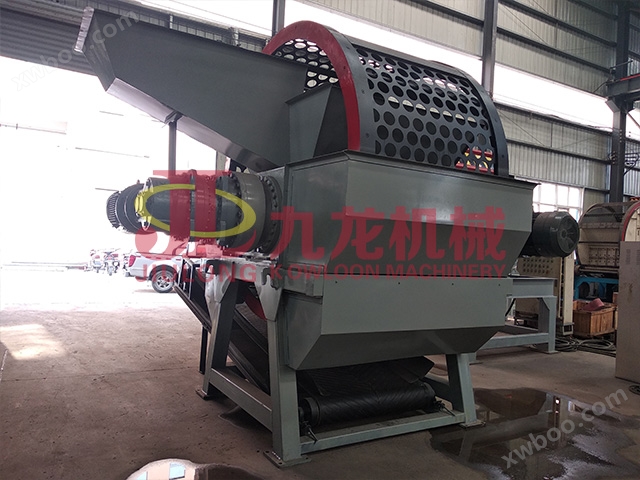
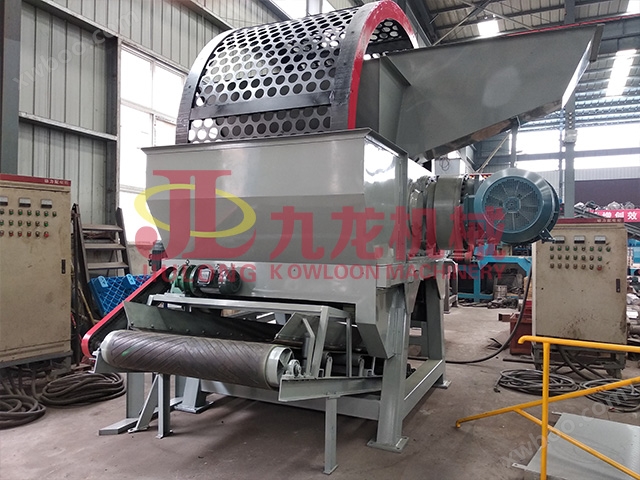
Tire shredder
There are various shapes of tire shredders, and each manufacturer's design has its own unique features. However, according to actual production needs
Product details
on-site case
-
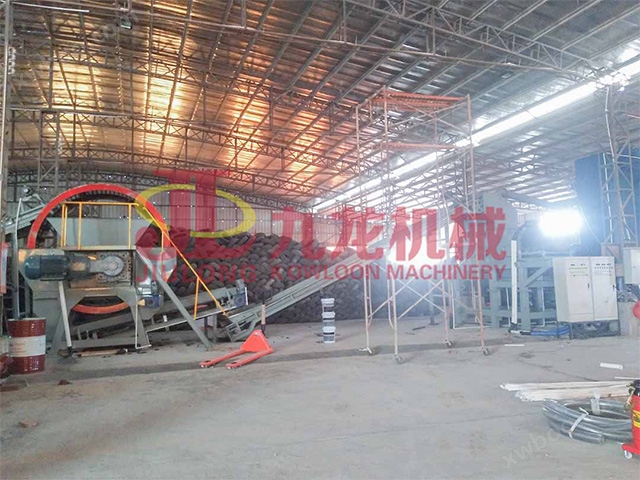 Anhui Waste Tire Production Line
-
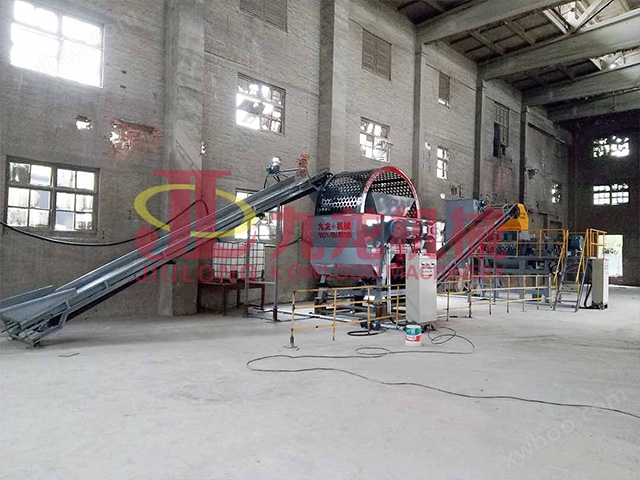 Beijing waste tire recycling equipment
-
 Guangdong waste tire crusher
-
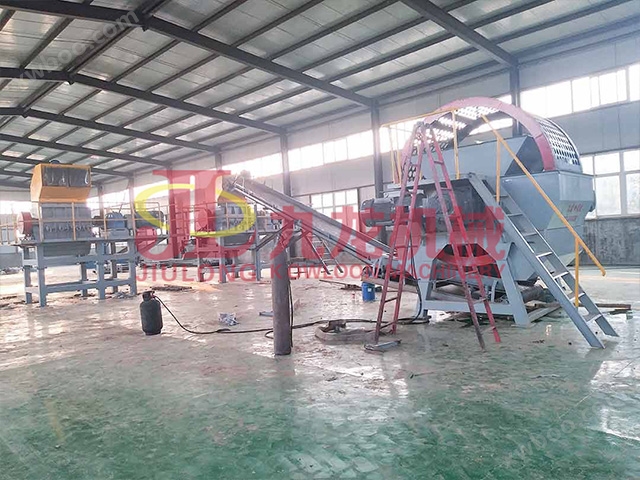 Hebei waste tire crusher
Product Introduction
The phenomenon of discarded waste tires is severe, and the recycling rate is low. The phenomenon of discarded waste tires is serious, which has an impact on environmental protection. China is a major consumer of rubber, with over 40% of waste tires remaining unused and difficult to degrade, becoming a source of black pollution. From the production and recycling of waste tires in China in recent years, there is still a lot of room for improvement in the recycling of waste tires.
Reference video:
The main ways of comprehensive utilization of waste tires in China are the direct utilization of waste tire prototypes, production of recycled rubber, production of vulcanized rubber powder, paving of waste tires, solid waste fuel, refining of waste tires, and cracking of waste tires. Burning waste tires and other waste together to recover energy in the form of steam or electricity can process a large amount of waste tires, but the resource utilization rate is still insufficient, only about 42% of the energy can be recovered. In addition, renovating, manufacturing rubber powder, processing raw rubber, using it as asphalt filler, and directly burning it as fuel have reduced resource waste and effectively protected the environment, making it a good solution.
On site testing for foreign customers:

In terms of working principle, the tire shredder adopts a low-speed and high torque rotating spindle motor direct connection design to crush and process the entire waste tire through the blade angle clamping effect. The waste tire blocks after biaxial tearing processing are realized by the rolling screen during the entire crushing process. Materials less than or equal to 50 * 50 leak out of the circular mesh screen and enter the subsequent process; Materials larger than 50 * 50 are returned to the crushing chamber through a circular mesh screen for cyclic crushing until the size of the rubber blocks meets the requirements before being discharged from the shredder. Large tire particles that have been expelled.
Production line display:

Bearing design: Adopting a reinforced design and a half split structure for easier maintenance. Equipped with dust-proof partitions, it can extend the service life of bearings.
Screen design: Control material size. Repeatedly shred the material by circulating it into the shredder, and control the output within the specified size range.
Blade body design: The blade is sturdy and wear-resistant, and the blade arrangement and bite method are specially designed for waste tires.
Power design: It is driven by a deceleration motor, which saves time, effort, and electricity, and has strong power.
Environmental design: The equipment has the characteristics of low speed, high torque, low noise, and dust that can meet environmental standards.

Production and production of rubber
The production of tires. Using chemical methods to desulfurize waste tire rubber and obtain recycled raw rubber is an ancient method of comprehensive utilization of waste tires. At present, the production technologies used for raw rubber include dynamic desulfurization, room temperature regeneration, raw rubber, low-temperature regeneration, low-temperature phase transfer catalytic desulfurization, microwave regeneration, radiation regeneration, raw rubber, and extrusion regeneration. This is a reasonable, scientific, and widely used way to recycle waste tires, which has been adopted by countries around the world.
Production of vulcanized rubber powder
The powder production industry has great potential for development. Due to its use of pure physical methods for processing, there is no problem of waste gas or wastewater pollution during production, and the resource utilization rate is high. It is a method for recycling and harmless processing of waste tires.
Laying roads with waste tires
New technologies and new lifestyles. The waste tires used for paving are called rubber asphalt. This new method of recycling waste tires originated in the United States and China in the 1960s - processing waste tires into rubber powder and adding it as a modifier to asphalt.
Display of Waste Tire Processing

The embodiment of light and heat. Waste tires are a type of high calorific value material, with a heat generation per kilogram that is 69% higher than wood, 10% higher than bituminous coal, and 4% higher than coke. Crush waste tires and mix them with various combustible waste materials according to the required ratio to prepare solid waste fuel (RDF) for use in blast furnaces as a substitute for coal, oil, and coke as fuel for burning cement or for coal and thermal power generation. At the same time, this method also produces a byproduct - carbon black, which can be activated and used as a reinforcing agent for the production of rubber products again.
Refining waste tires
The waste tire refining equipment converts waste tires into 45-52% cracking oil, 30% -35% carbon black, and 10-15% steel wire through high-temperature pyrolysis. These cracked oils can be used in heavy industries such as cement plants, glass plants, boiler plants, and so on. Carbon black can be used in cement plants, compressed into balls and sold.
Cracking waste tires
One of the main ways to convert it into renewable energy and non rubber renewable resources is through catalytic pyrolysis, high and low temperature pyrolysis. Waste tires can be used to extract steel, carbon black, oil, gas, etc. at high temperatures. 35 kilograms of carbon black and 55 kilograms of fuel oil can be recovered from one ton of waste tires.

l、 Laying of sports venues: running tracks, campus sports fields, swimming fields, park trails, bowling alleys, sidewalks, kindergarten sports and entertainment venues, tennis and basketball courts.
2. Automotive industry: floor mats for belts and trains, brake disc ribbons, floors for cars and trucks, brake brake bushings, seals, buffers, shock absorbers, car body seals and stainless steel materials, splash and soil protection, daily marine raw materials, tires and tire liners.
3. Building/Equipment: Adhesives/sealants, company, bathroom flooring, insulation materials, carpet liners, livestock grass mats, extruded products, waste brake surfaces, molded products, coatings, dams, warehouses, ponds, waste treatment stations, brick roof liners and coverings, raised patterned flooring, roof signs, sheets, waterproofing materials, shock absorbers, washers, waterproofing materials for roofs and walls.
4. Application of Geotechnical/Asphalt: Drainage pipes, asphalt treated with rubber for road and lane paving, filters, soil conditioning/pavement covering, porous flushing pipes, horse racing tracks, railway intersections, traffic/pedestrian obstacles, railway crack joint sealants for road construction and maintenance, and sea transportation.
5. Production and reuse of rubber: used for producing various rubber products.

8-20 mesh: mainly used for runway, road cushion, pad, lawn, paving elastic layer, sports field paving, etc.
30-40 mesh: mainly used in the production of recycled rubber, modified rubber powder, paving, production of rubber sheets, etc.
40-60 mesh: called fine rubber powder, used for filling rubber products, plastic modification, etc.
60-80 mesh: known as fine rubber powder, mainly used in automotive tires, rubber products, building materials, etc.
80-200 mesh: called fine rubber powder, mainly used in rubber products and military products.
[Application Example]
(1) Permeable asphalt additive, which can recycle 3500 tires per kilometer of road;
(2) Guardrail, with a height of 3 meters per kilometer, can accommodate 20000 tire products.
(3) Playground surface (25mm), 50 ㎡ playground, can use 2400 tire products.
(4) On the surface of the game field, 300 tire products can be used for every 50 square meters of the game field.
(5) The sports field (15mm) can accommodate 6000 tire products for every 3000 square meters of space.
(6) A tennis court, every 680 square meters, can use 700 tire products.
(7) Indoor runway, every 1000 square meters, can use 1300 tire products.
(8) The tram subgrade can use 20000 tire products per kilometer.
(9) The underground railway can use 2000 tire products per kilometer.
Profit Analysis of Processing Rubber Particles from Waste Tires
(1) The cost of recycling each waste tire is 500 yuan, and the shipping cost is calculated at 50 yuan.
(2) The cost of producing water and electricity for each village is calculated at 100 yuan for electricity.
(3) The labor cost for 3 workers is 70 yuan per production unit.
(4) The raw material loss and transportation loss rate is 3%, and the cost is 60 yuan.
(5) Other unforeseeable expenses are 20 yuan per unit.
(6) The total production cost per village is 800 yuan.

The estimated profit per meal is 1800 yuan for each rubber granule, and after deducting the cost of 800 yuan per meal, the profit per meal is 1000 yuan; Excluding 30% of the steel wire, the profit per meal is 700 yuan. The above profit is only for rubber particle products and has not been calculated for the fiber and steel wire of the tire.
Product Catalog
-
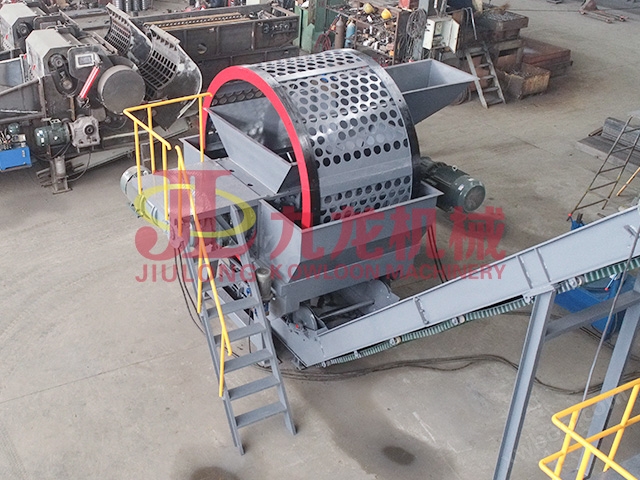 Tire shredder
-
 Tire shredder
-
 Tire shredder
-
 Tire shredder
Technical Specifications

Note: Depending on the shredded material, the number of cutter heads and teeth may vary and can be customized.
Online inquiry
-
Contacts
-
Company
-
Telephone
-
Email
-
WeChat
-
Verification Code
-
Message Content
-