VIP member
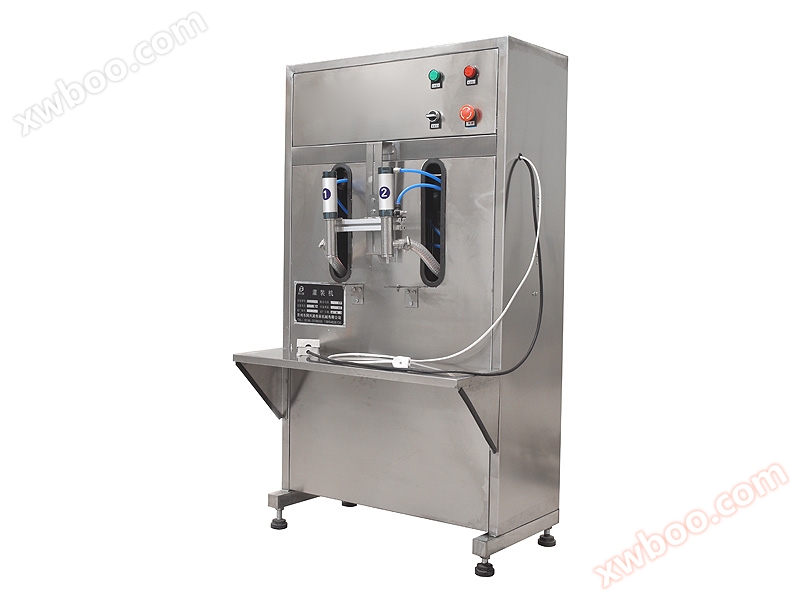
Two end semi-automatic laundry detergent filling machine
The laundry detergent filling machine is an ideal viscosity fluid filling equipment suitable for pharmaceutical, daily chemical, food, pesticide and s
Product details
The laundry detergent filling machine is an ideal viscosity fluid filling equipment suitable for pharmaceutical, daily chemical, food, pesticide, and special industries.
Laundry detergent filling machine: The liquid filling machine production line is a bottling production line composed of single machines such as bottle sorting, filling, capping, aluminum foil sealing, and adhesive tape. Made of high-quality 316L stainless steel, with no dripping during filling, a clean and hygienic working environment, and high efficiency.
This machine is a semi-automatic piston type liquid filling machine. The design of the machine is reasonable, the model is compact, the vertical structure saves space. Easy to operate, all pneumatic components are imported. The material contact parts are made of 316L stainless steel material, which meets GMP requirements. The filling valve is controlled by an electromagnetic valve, resulting in higher filling accuracy. The filling volume and filling speed can be adjusted freely. The filling hood adopts anti wire drawing and lifting filling device.
Performance and features:
1. High degree of automation, easy operation, stable operation, can effectively save enterprise costs and improve production efficiency.
2. Each individual machine can complete its work with an operating system and electrical components such as numerical control displays to control and adjust various parameters and display settings. Can help enterprises achieve standardized production.
3. The linkage and separation of each individual machine are fast, and the adjustment is quick and simple, ensuring coordination in every production process.
4. Each individual machine can adapt to packaging of various specifications of bottles, with few adjustment parts.
5. This packaging production line adopts international new technology design and complies with GMP standards.
6. The production line runs smoothly, with convenient combination of various functions and easy maintenance. Multiple production combinations can be made according to the individual product process requirements of users.
Online inquiry
-
Contacts
-
Company
-
Telephone
-
Email
-
WeChat
-
Verification Code
-
Message Content
-