
VIP member

Rectangular metal expansion joint
Product Details: Rectangular Three Wave Compensator - Jiangsu Shouchuang Pipeline Equipment Three Wave Compensator Structure and Performance: Rectangu
Product details
Product DetailsProduct Feature
-
Rectangular (Square) Three Wave Compensator - Jiangsu Shouchuang Pipeline Equipment
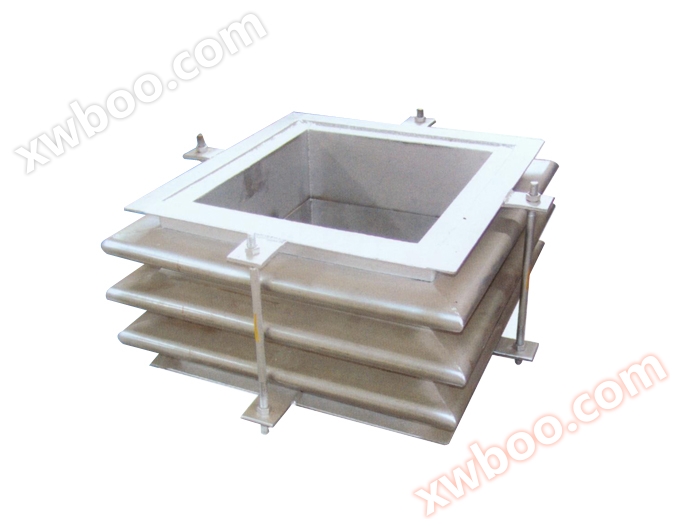
The structural performance of the three wave compensator:
The rectangular three wave ripple compensator belongs to a type of compensation element. By utilizing the effective expansion and contraction deformation of its working body corrugated tube, it can absorb the dimensional changes caused by thermal expansion and contraction of pipelines, conduits, containers, etc., or compensate for the axial, lateral, and angular displacement of pipelines, conduits, containers, etc. It can also be used for noise reduction and vibration reduction. Widely used in modern industry.
Installation and pressure testing precautions for rectangular three wave ripple compensator/expansion joint
1. Before installation, the model and specifications of the expansion joint of the corrugated compensator and the support configuration of the pipeline should be checked to meet the requirements of the composite design.
2. For expansion joints with inner lining cylinders, attention should be paid to aligning the direction of the inner lining cylinder with the flow direction of the medium (installed according to the flow direction mark of the expansion joint). The hinge rotation screen of the planar angular expansion joint should be consistent with the displacement plane.
3. The rectangular (square) three wave compensator requires a "cold tight" expansion joint, and the auxiliary components used for its pre deformation should be removed after the pre deformation of the expansion joint.
4. After the installation of the piping system is completed, the auxiliary positioning mechanism and fasteners used for installation and transportation protection on the expansion joint should be immediately removed, and the limit device should be adjusted to the specified position according to the design requirements, so that the piping system can be fully compensated under environmental conditions.
5. It is strictly prohibited to use corrugated pipe deformation method to adjust the installation deviation of the pipeline, except for pre tensioning or "cold tightening" pre deformation required by the design, in order to avoid affecting the normal function of the expansion joint, otherwise it will reduce its service life and increase the load on the pipeline system, equipment and supporting components.
6. All active components of the expansion joint must not be jammed or restricted from normal movement by external components.
7. During the installation process, it is not allowed for welding slag to splash onto the surface of the small corrugated tube and cause other mechanical damage to the corrugated tube.
8. When conducting water pressure tests on expansion joints and their connecting pipelines used for gas media, it is necessary to consider whether temporary supports need to be added to the connecting pipes of the expansion joints during water filling to support the load.
9. The water used for hydrostatic testing needs to be pure, non corrosive, and the content of chloride ions in the water should not exceed 25ppm. After the hydrostatic test is completed, the accumulated water in the corrugated pipe should be drained as soon as possible, and the inner surface of the corrugated shell should be quickly dried.
10. When there is no other method to ensure the neutrality of the pipeline, the method of laying straight pipes, cutting off equal length pipelines, and installing expansion joints can be used to ensure it.
11. It should be noted that the expansion joint does not absorb torque, so when installing the expansion joint, it is not allowed to be twisted.
12. All movable components of the rectangular three wave expansion joint must not be jammed or restricted from normal operation by external components.
13. The insulation layer should be placed on the outer protective sleeve of the expansion joint and should not be directly placed on the corrugated pipe. Chlorine containing insulation materials shall not be used.
14. During the installation process, it is not allowed for welding slag to splash onto the surface of the corrugated pipe and cause other mechanical damage to the corrugated pipe.
15. The bracket must meet the design requirements, and it is strictly prohibited to test the pressure inside the pipeline before the bracket is installed to avoid damaging the expansion joint.
16. The rectangular three wave expansion joint is allowed to undergo a pressure test not exceeding 1.5 times the nominal system pressure.
17. During the operation of pipelines equipped with expansion joints, the opening and closing of valves should be gradually carried out to avoid sudden changes in temperature and pressure inside the pipeline, which may cause damage to the supports or expansion joints.
Online inquiry
-
Contacts
-
Company
-
Telephone
-
Email
-
WeChat
-
Verification Code
-
Message Content
-