VIP member
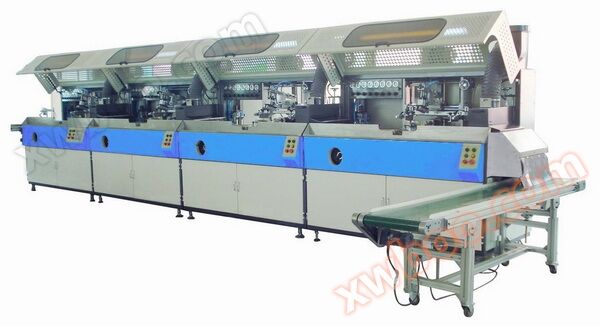
Price of fully automatic screen printing machine, screen printing machine manufacturer
Price of fully automatic screen printing machine, screen printing machine manufacturer
Product details
Price of fully automatic screen printing machine, screen printing machine manufacturer


Screen printing machines are divided into vertical screen printing machines, oblique arm screen printing machines, rotary screen printing machines, four column screen printing machines, and fully automatic screen printing machines.
The characteristics of vertical screen printing machine: for high-precision printing, such as high-tech electronics industry, multi-color overlay printing, dot printing, etc. Compared with diagonal arm screen printing machines, it has lower efficiency but higher accuracy;
Characteristics of oblique arm screen printing machine: For the packaging industry, or for partial UV printing, it has high efficiency but low accuracy;
Characteristics of rotary screen printing machine: For industries such as clothing or optical disc that are difficult to position, rotary screen printing can be adopted;
The characteristics of a four column screen printing machine: It is designed for industries with large areas, such as decoration and large glass industries.
The characteristics of a fully automatic screen printing machine are: it is a roll to roll printing machine for soft materials such as PET, PP, PC, PE, etc. It is completed by the integrated process of feeding, printing, and drying, and is the best choice for large-scale production;
The characteristics of the fully automatic elliptical screen printing machine are mainly suitable for printing clothing cutting pieces, and can print adhesive, water-based, ink and other pastes.
Folding and editing common faults in this paragraph
There are always various malfunctions in the printing process of screen printing machines, such as manual and semi-automatic not working at all, power lights on, and not working after the printing seat is moved to the left.
The first fault phenomenon: Immediate action without stepping on the foot switch during semi-automatic operation.
The cause of such faults is mostly due to damage to the foot switch or water ingress into the foot switch socket, resulting in a short circuit. Another reason is that there is a problem with the manual start button switch. The repair method is to replace the switch, socket, button switch with a new one or disassemble and repair the related damaged parts.
The second fault phenomenon: During semi-automatic operation, stepping on the foot switch causes the slide seat to descend, and after releasing it, it rises again.
This phenomenon is generally caused by the damage or disconnection of the proximity switch on the left side of the sliding seat. The solution is to replace the proximity switch or connect the switch connection.
The third fault phenomenon: During semi-automatic operation, stepping on the foot switch causes the vertical slide seat to descend, and the printing seat does not move after moving to the left.
The cause of this malfunction is that the proximity switch on the left side of the sliding seat is not sensed or there is a problem. The solution is to adjust the sensing point of the left proximity switch or replace the proximity switch; The micro switch inside the foot switch is stuck and not functioning, which can also cause this fault. The solution is to adjust, repair or replace the micro switch inside the foot switch with a new one.
The fourth fault phenomenon: During semi-automatic operation, stepping on the foot switch causes the slide seat to descend to the left and then ascend but not to the right. The occurrence of this phenomenon is due to the proximity switch on the upper left side of the vertical sliding seat not sensing or there being a problem with the proximity switch. The solution is to adjust the proximity switch sensing on the upper side or use a better proximity switch.
The fifth fault phenomenon: slow upward movement by half a beat after switching actions. This type of malfunction is caused by foreign objects blocking the control solenoid valve or a faulty solenoid valve. The solution is to remove the solenoid valve, clean it, or replace it with a new one.
The sixth fault phenomenon: Both manual and semi-automatic do not operate, and the power light is on. The causes of such faults include blown low-voltage side fuses, no air source entering, and all solenoid valves malfunctioning. The solution is to replace the low voltage side fuse and check if the pressure reaches 4-7kg/cm. The electromagnetic valve has a minor fault, most likely due to a broken connection.
The seventh fault phenomenon: automatic and semi automatic start without decreasing. This type of malfunction occurs when the proximity switch on the right side of the sliding seat is faulty or not sensed, the selection switch is faulty, or the single action switch interlock point is damaged. The solution is to adjust the proximity switch sensing or replace the right proximity switch, replace or repair the selection switch and single action switch. The eighth fault phenomenon: automatic failure to start. This type of fault is caused by the micro switch of the upper and lower cylinders being normally closed, the contacts being unable to conduct, or the timer being damaged. The solution is to repair the micro switch or replace the timer.
The ninth fault phenomenon: The workbench does not suck air, and the cause of this type of fault is that the suction motor has burned out.
The contactor that controls the operation of the motor is damaged, and the suction motor rotates, but the control suction solenoid valve and suction selection switch are faulty. The solution is to repair or replace them.
The tenth fault phenomenon: The workbench does not suck air, due to a broken control solenoid valve or damaged internal block. The solution is to replace and repair it.
The eleventh fault phenomenon: The vertical sliding seat rises slowly due to the lack of oil in the vertical sliding seat bearing or wear of the cylinder piston, causing the axis to bend due to magnetic impact. The solution is to supply oil, replace the piston command, and adjust the axis.
Online inquiry
-
Contacts
-
Company
-
Telephone
-
Email
-
WeChat
-
Verification Code
-
Message Content
-