
VIP member
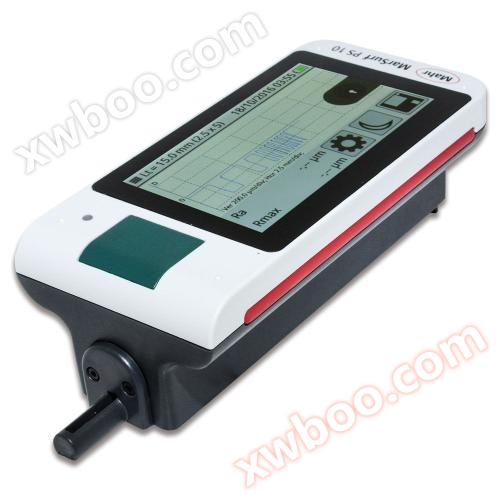
MarSurfWS1 non-contact surface measuring instrument
Product Introduction: High precision, non-contact surface measurement. The surface morphology characteristics of workpieces are increasingly influence
Product details
Product Introduction
High precision, non-contact surface measurement
The surface morphology characteristics of workpieces are increasingly influenced by processing methods and materials.
The traditional contour probe contact method often cannot fully reflect the functional characteristics of the surface, so three-dimensional recording and evaluation have become necessary. Workpieces made of soft or thin materials also require non-contact measurement.
In addition, even if a higher level of surface quality is obtained, it greatly increases the requirements for resolution and measurement accuracy in the measurement system.
MarSurf WS 1 is an optical surface sensor based on white light interferometry. This technology can achieve fast and high-precision surface morphology measurement and is applicable to a wide range of workpieces made of different materials.
The difference between this design and traditional interferometry is the use of white light instead of continuous light. Because white light has a shorter continuous length, it exhibits more characteristics in measuring the surface morphology of the reaction. Compared to traditional interferometry, height information can be clearly displayed and analyzed when measuring height. The surface area to be measured is displayed in a CCD camera, and the high-precision reference surface is imaged at the same scale through object mirror interference (Mirau objective). The sampled pattern and reference pattern are layered through a beam splitter and interference is obtained in the camera.
During the measurement process, the Mirau objective lens can be adjusted remotely in the Z-axis direction to generate interference patterns that are recorded as image stacks and converted into height data for evaluation.
The difference between this design and traditional interferometry is the use of white light instead of continuous light. Because white light has a shorter continuous length, it exhibits more characteristics in measuring the surface morphology of the reaction. Compared to traditional interferometry, height information can be clearly displayed and analyzed when measuring height. The surface area to be measured is displayed in a CCD camera, and the high-precision reference surface is imaged at the same scale through object mirror interference (Mirau objective). The sampled pattern and reference pattern are layered through a beam splitter and interference is obtained in the camera.
During the measurement process, the Mirau objective lens can be adjusted remotely in the Z-axis direction to generate interference patterns that are recorded as image stacks and converted into height data for evaluation.
MarSurf WS 1 can be used in both precision laboratories and production environments.
Other optical measurement principles can easily exceed their measurement range when measuring different types of surfaces, some of which cannot achieve highly reflective surface measurements, while others cannot even accurately measure rough surfaces.
MarSurf WS 1 and its innovative measurement signal evaluation are suitable for the analysis of reflective and rough workpiece surfaces. For example, vertical high-resolution can be used to measure optical components such as lenses or lens surface roughness with sub micron precision. It can also be used for surface texture detection and measurement of micro mechanical components, suitable for measuring workpieces of various materials such as glass, paper, oil surface, metal, plastic, coatings, and liquids.
MarSurf XT 20 morphology measurement software is a powerful evaluation tool with a wide range of functions. Thanks to the standard MarWin software platform, you can also benefit from the MarSurf XC 20 software.
Other optical measurement principles can easily exceed their measurement range when measuring different types of surfaces, some of which cannot achieve highly reflective surface measurements, while others cannot even accurately measure rough surfaces.
MarSurf WS 1 and its innovative measurement signal evaluation are suitable for the analysis of reflective and rough workpiece surfaces. For example, vertical high-resolution can be used to measure optical components such as lenses or lens surface roughness with sub micron precision. It can also be used for surface texture detection and measurement of micro mechanical components, suitable for measuring workpieces of various materials such as glass, paper, oil surface, metal, plastic, coatings, and liquids.
MarSurf XT 20 morphology measurement software is a powerful evaluation tool with a wide range of functions. Thanks to the standard MarWin software platform, you can also benefit from the MarSurf XC 20 software.
Compact sensor
New lighting concept
• Powered through USB
• High image ratio, such as shorter measurement time
• Sub nanometer high resolution
• Measurement time (including evaluation typically 20 to 30 seconds)
• Principles of modular design
• Interchangeable lighting and imaging pathways
• Evaluate the advantages of the new system using MarWin standard morphology software
New lighting concept
• Powered through USB
• High image ratio, such as shorter measurement time
• Sub nanometer high resolution
• Measurement time (including evaluation typically 20 to 30 seconds)
• Principles of modular design
• Interchangeable lighting and imaging pathways
• Evaluate the advantages of the new system using MarWin standard morphology software
Detailed information
Online inquiry
-
Contacts
-
Company
-
Telephone
-
Email
-
WeChat
-
Verification Code
-
Message Content
-