
VIP member
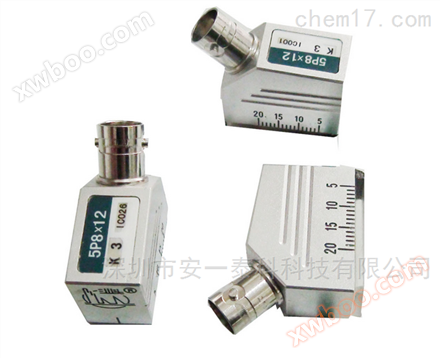
E+H split type ultrasonic probe FDU96
The E+H split type ultrasonic probe FDU series ultrasonic sensor is suitable for continuous, non-contact, and maintenance free level measurement of po
Product details
Ultrasonic probes are mainly divided into: straight probe, oblique probe, curvature probe, focusing probe, surface wave probe, water immersion probe, twin crystal probe, thickness measurement, high temperature probe, etc. A single crystal probe used for vertical flaw detection, the ultrasonic wave generated by the straight probe is a longitudinal wave beam perpendicular to the surface of the probe.
E+H Split Ultrasonic Probe FDU SeriesWorking principle
E+H Split Ultrasonic Probe FDU SeriesThe main materials for ultrasonic probes are piezoelectric crystals (electrostrictive) and nickel iron aluminum alloys (magnetostrictive). Materials for electrostriction include lead zirconate titanate (PZT) and others. The ultrasonic sensor composed of piezoelectric crystals is a reversible sensor that can convert electrical energy into mechanical oscillations to generate ultrasonic waves. At the same time, when it receives ultrasonic waves, it can also be converted into electrical energy, so it can be divided into a transmitter or a receiver. Some ultrasonic sensors can be used for both transmission and reception.
E+H Split Ultrasonic Probe FDU SeriesTechnical Parameter
1. Piezoelectric strain constant d33:
D33=Dt/U When a stress of U is applied to the piezoelectric chip, there is a change in Dt in the thickness of the chip. The larger d33, the higher the emission sensitivity.
2. Piezoelectric voltage constant g33:
G33=UP/P Apply such a large stress of P on the piezoelectric chip The larger the voltage generated on the piezoelectric chip, the higher the g33, and the higher the receiving sensitivity.
3. Dielectric constant e:
E=Ct/A [C-capacitance, t-plate distance (chip thickness), A-plate area (chip area)];
C small → e small → short charging and discharging time High frequency.
4. Electromechanical coupling coefficient K:
Indicates the conversion efficiency between mechanical energy (acoustic energy) and electrical energy of piezoelectric materials.
For the positive piezoelectric effect: K=converted electrical energy/input mechanical energy.
For the inverse piezoelectric effect: K=converted mechanical energy/input electrical energy
When the chip vibrates, it undergoes simultaneous expansion and contraction deformation in both the thickness and radial directions. The thickness direction undergoes significant deformation, resulting in high detection sensitivity and radial deformation, as well as increased clutter, reduced resolution, increased blind spots, and wider emission pulses (Partial answers to questions 16 and 19 in the lecture notes).
Sound speed: 324.0 M/S Workpiece thickness: 16.00MM Probe frequency: 2.500MC
Probe K value: 1.96 Probe front edge: 7.00MM Groove type: X
Groove angle: 60.00 Welding width: 2.00MM Compensation: -02 dB
Rejected:+05dB Quantification: -03dB Assessment: -09 dB
Weld junction number: 0000 Defect number: 1 Test date: 05.03.09
Sound speed: 324.0 M/S Workpiece thickness: 16.00 MM Probe frequency: 5.00 MC
Probe K value: 1.95 Probe front edge: 7.00 MM Groove type: X
Groove angle: 60.00 Welding width: 2.00 MM Compensation: -02 dB
Rejected:+05 dB Quantification: -03 dB Assessment: -09 dB
Weld junction number: 0000 Defect number: 1 Test date: 05.03.09
5. Mechanical quality factor qm:
Qm=E storage/E loss. When a piezoelectric chip resonates, the ratio of the stored mechanical energy to the energy lost during one cycle (deformation, recovery) is called... Loss is mainly caused by intramolecular friction.
QM is large, loss is small, vibration time is long, pulse width is large, and resolution is low.
QM is small, loss is large, vibration time is short, pulse width is small, and resolution is high.
6. Frequency constant Nt:
Nt=tf0, The product of the thickness of a piezoelectric chip and its natural frequency is a constant. The material of the chip is constant, and the smaller the thickness, the higher the frequency (Partial answers to questions 16 and 19 in the lecture notes).
7. Curie temperature Tc:
The piezoelectric effect of piezoelectric materials can only occur within a certain temperature range. Beyond a certain temperature, the piezoelectric effect disappears, and the temperature at which the piezoelectric effect disappears is called the Curie temperature (mainly due to high temperature effects).
Another important indicator of ultrasonic probes is signal-to-noise ratio - the ratio of useful signals to useless signals must be greater than 18 dB.
E+H Split Ultrasonic Probe FDU SeriesBetter precision, easier use and installation.Our company keeps their inventory year-round for the convenience of our customers, with obvious price advantages and short delivery times. We can ship before 4pm on the same day. If you need, you can call to discuss in detail. We will serve you wholeheartedly
Online inquiry
-
Contacts
-
Company
-
Telephone
-
Email
-
WeChat
-
Verification Code
-
Message Content
-