
VIP member
Product details
1、 Performance and Application
Polyol phosphate ester PAPE is a new type of water treatment agent with excellent scale and corrosion inhibition properties. Due to the introduction of multiple polyoxyethylene groups into the molecule, not only does it improve the corrosion inhibition performance, but it also enhances the scale inhibition of calcium deposits and the dispersion ability of sediment. It has excellent inhibitory effect on the deposition of barium and strontium scales in water that cannot be controlled by existing scale inhibitors in China, and also has excellent scale inhibition effect on the deposition of insoluble salts such as calcium carbonate and calcium sulfate in water. It has cathodic protection effect on steel and has better corrosion inhibition effect than similar products in China. Polyol phosphate ester PAPE is well miscible with water stabilizers such as polycarboxylates, organic phosphonates, inorganic phosphates, and zinc salts.
Polyol phosphate esters are used as scale inhibitors for oilfield water injection collection and industrial cooling water treatment.
2、 Technical indicators
Project indicators
Appearance: Colorless or yellow transparent liquid
Solid content% ≥ 50.0
Total phosphorus content (calculated as PO43-)% ≥ 30.0
Organic phosphine content (calculated as PO43-)% ≥ 15.0
PH value (1% aqueous solution) 2.0-3.0
3、 PAPE usage and dosage
Due to differences in water quality and process conditions. Polyol phosphate ester PAPE is used as a scale inhibitor, with a general dosage of less than 15mg/L. When used as a closed cycle corrosion inhibitor, it can be as high as 150mg/L or more.
4、 Security protection
Polyol phosphate ester PAPE is an acidic liquid. When operating, pay attention to labor protection and avoid contact with skin, eyes, etc. After contact, rinse with plenty of water.
5、 Packaging and Storage
Polyol phosphate ester PAPE is a new type of water treatment agent with excellent scale and corrosion inhibition properties. Due to the introduction of multiple polyoxyethylene groups into the molecule, not only does it improve the corrosion inhibition performance, but it also enhances the scale inhibition of calcium deposits and the dispersion ability of sediment. It has excellent inhibitory effect on the deposition of barium and strontium scales in water that cannot be controlled by existing scale inhibitors in China, and also has excellent scale inhibition effect on the deposition of insoluble salts such as calcium carbonate and calcium sulfate in water. It has cathodic protection effect on steel and has better corrosion inhibition effect than similar products in China. Polyol phosphate ester PAPE is well miscible with water stabilizers such as polycarboxylates, organic phosphonates, inorganic phosphates, and zinc salts.
Polyol phosphate esters are used as scale inhibitors for oilfield water injection collection and industrial cooling water treatment.
2、 Technical indicators
Project indicators
Appearance: Colorless or yellow transparent liquid
Solid content% ≥ 50.0
Total phosphorus content (calculated as PO43-)% ≥ 30.0
Organic phosphine content (calculated as PO43-)% ≥ 15.0
PH value (1% aqueous solution) 2.0-3.0
3、 PAPE usage and dosage
Due to differences in water quality and process conditions. Polyol phosphate ester PAPE is used as a scale inhibitor, with a general dosage of less than 15mg/L. When used as a closed cycle corrosion inhibitor, it can be as high as 150mg/L or more.
4、 Security protection
Polyol phosphate ester PAPE is an acidic liquid. When operating, pay attention to labor protection and avoid contact with skin, eyes, etc. After contact, rinse with plenty of water.
5、 Packaging and Storage
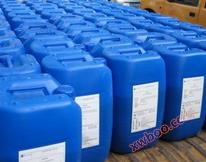
Polyol phosphate ester PAPE is packaged in plastic drums with a net weight of 25kg or 200kg per drum. It is stored in a cool and dry place for a storage period of twelve months.
6、 Precautions for using corrosion and scale inhibitors
Corrosion and scale inhibitors have the advantages of being miscible with water in any proportion, not producing any toxic or harmful substances, being chemically inactive, and resistant to high temperatures. Even when used above 200 degrees Celsius, they have good scale inhibition effects and are commonly used for scale inhibition and corrosion prevention in boilers of all sizes. The operation of corrosion and scale inhibitors is very simple, just add corrosion and scale inhibitors to the container, which is loved by everyone.
Polyphosphate is one of the most widely used corrosion and scale inhibitors, belonging to inorganic polymers, among which the most common compounds are sodium hexametaphosphate and sodium tripolyphosphate. When using such corrosion and scale inhibitors, it is important to avoid hydrolysis as much as possible and consider the most suitable pH value. In order to improve the scale inhibition effect of polyphosphates, they are usually used together with salts containing metallic zinc.
When using polyphosphates, the following points must be noted.
Firstly, the dissolved oxygen in water must be above 2mL/L and contain divalent ions such as calcium ions.
Secondly, polyphosphate, as a corrosion and scale inhibitor, is not suitable for use alone.
Thirdly, the pH should be controlled at a weakly alkaline level. Organic phosphonates also have excellent corrosion and scale inhibition effects. It has many chemical properties similar to polyphosphates, but organic phosphonates are relatively stable and will not easily hydrolyze even at high temperatures.
Organic phosphonic acid has moderate acidity and is miscible with water in any proportion. The more common ones are ATMP, HEDP, etc. When using organic phosphonic acid as a corrosion and scale inhibitor, the concentration of carbonate in water should be controlled below the concentration that organic phosphonic acid salts can withstand. Organic phosphonates, as corrosion and scale inhibitors, have been applied in cold water circulation and are rarely used alone. Instead, they are used in combination with various agents. Under the same dosage, the best effect is achieved when different drugs are used together. HEDP is an inactive and non easily hydrolyzed phosphonic acid with good high-temperature resistance and some resistance to weakly oxidizing agents. In practical applications, it is used together with other corrosion and scale inhibitors such as zinc salts.
Simply put, corrosion and scale inhibitors are chemical reagents that can inhibit the regeneration of scale. The two types of corrosion and scale inhibitors mentioned above are commonly used in water treatment, mainly for the maintenance of equipment such as water coolers, oil coolers, and pipelines. In addition to the above two types, there are various types of corrosion and scale inhibitors, such as composite scale inhibitors, RO scale inhibitors, and specialized scale inhibitors.
Online inquiry
-
Contacts
-
Company
-
Telephone
-
Email
-
WeChat
-
Verification Code
-
Message Content
-