
VIP member
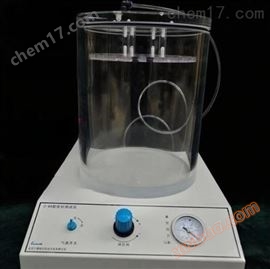
C-95 Soft Packaging Bag Sealing Tester
The sealing tester for flexible packaging bags is designed and manufactured in accordance with the relevant provisions of GB/T15171-94 Test Methods fo
Product details
| price range | 10000 to 10000 | Origin category | domestic |
|---|---|---|---|
| Application field | printing and packaging |
C-95Soft packaging bag sealing testerProduct Introduction
Product model: C-95
Product Name: Sealing Tester Packaging Bag Test Packaging Leakage Test Mineral Water Sealing Test
This product "C-95 Sealing Test" is designed and manufactured in accordance with the relevant provisions of GB/T15171-94 Soft Packaging Sealing Test Performance Test Method, and is suitable for sealing tests of flexible packaging in industries such as food, pharmaceuticals, and daily chemical. Through experiments, the sealing process and sealing performance of flexible packaging can be effectively compared and evaluated, providing a scientific basis for determining relevant technical requirements. Airtightness testing of specimens can also be conducted after drop and pressure tests.
This product uses compressed air as the power source, a plastic vacuum generator as the energy conversion component, and a vacuum gauge as the visual display method. Through pressure control, it achieves excellent performance such as fast vacuum speed, intuitive effect, and fast testing process. All pneumatic system components are imported from Germany, with stable performance and extremely reliable operation, requiring no maintenance for three years. The complete functional settings and various vacuum degrees can meet the requirements of various test methods specified by national standards.
C-95Soft packaging bag sealing testerIndicator:
The set vacuum level can be achieved within 30 seconds.
Measurement range: -0-0.9 bar
Test cylinder inner volume: c-95: φ 270mm × 330mm [c-951: φ 270mm × 490mm]
Note: Testing instrument size: 40 * 45 * 60 (cm)
Compressed air pressure: 0.2-0.8MPa
Gas consumption: 70L/min
Net weight of equipment: 9Kg
Add a gas separation device to eliminate impurities and interference, with a long lifespan.
Experimental principle:
By evacuating the vacuum chamber, a pressure difference between the inside and outside of the sample immersed in water is generated, and the gas leakage inside the sample is observed to determine the sealing performance of the sample. Alternatively, by evacuating the vacuum chamber, a pressure difference between the inside and outside of the sample is generated, and the shape recovery of the sample after expansion and release of vacuum is observed to determine the sealing performance of the sample.
Online inquiry
-
Contacts
-
Company
-
Telephone
-
Email
-
WeChat
-
Verification Code
-
Message Content
-